Why Incident Reporting Is a Critical Part of Modern Healthcare
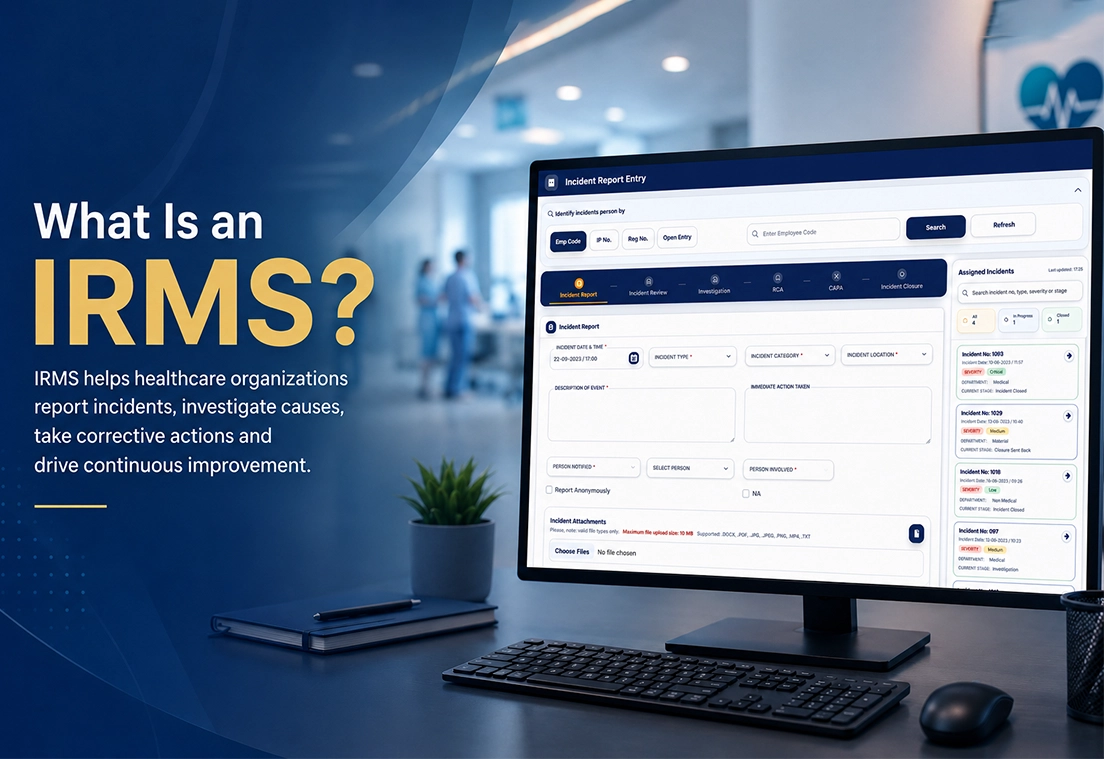
An Incident Reporting Management System (IRMS) is th e digital framework hospitals use to capture, investigate, and resolve patient safety incidents. It connects reporting, root cause analysis, and corrective action into one structured workflow, helping healthcare organizations move beyond documentation toward real, measurable quality improvement across every department.
The Operational Challenges Behind Hospital Incident Management
Recorded incident management is not an effective incident management. The absence of a well-designed incident management system makes it challenging for hospitals to investigate incidents uniformly, meet predetermined timeframes for responding to incidents and making improvements that minimize risk. The operational gaps may undermine the strength of patient safety programs, impact clinical governance and reduce an organization's capacity to make informed decisions concerning quality.
- Delayed Escalation: Critical incidents may not reach the appropriate teams in time, delaying response, investigation, and resolution.
- Fragmented Investigations: Documentation and workflows make it challenging to do in-depth investigations from the cross-functional perspective.
- Lack of consistency in Root Cause Analysis (RCA): If there is no standard in the approach, the root cause may not be identified, which can increase the chances of a repeat incident.
- Missed Corrective and Preventive Actions (CAPA): Improvement actions are not well monitored, follow-up is incomplete and quality issues are not solved.
- Inadequate Leadership Information: Hospital leadership may not have a single view of incident trends, risks, and organizational performance.
- Challenges in Tracking Quality Performance: Measuring incident patterns, response timelines, and quality indicators becomes difficult without structured reporting and analytics.
From Incident Reporting to Quality Improvement: The Modern IRMS Journey
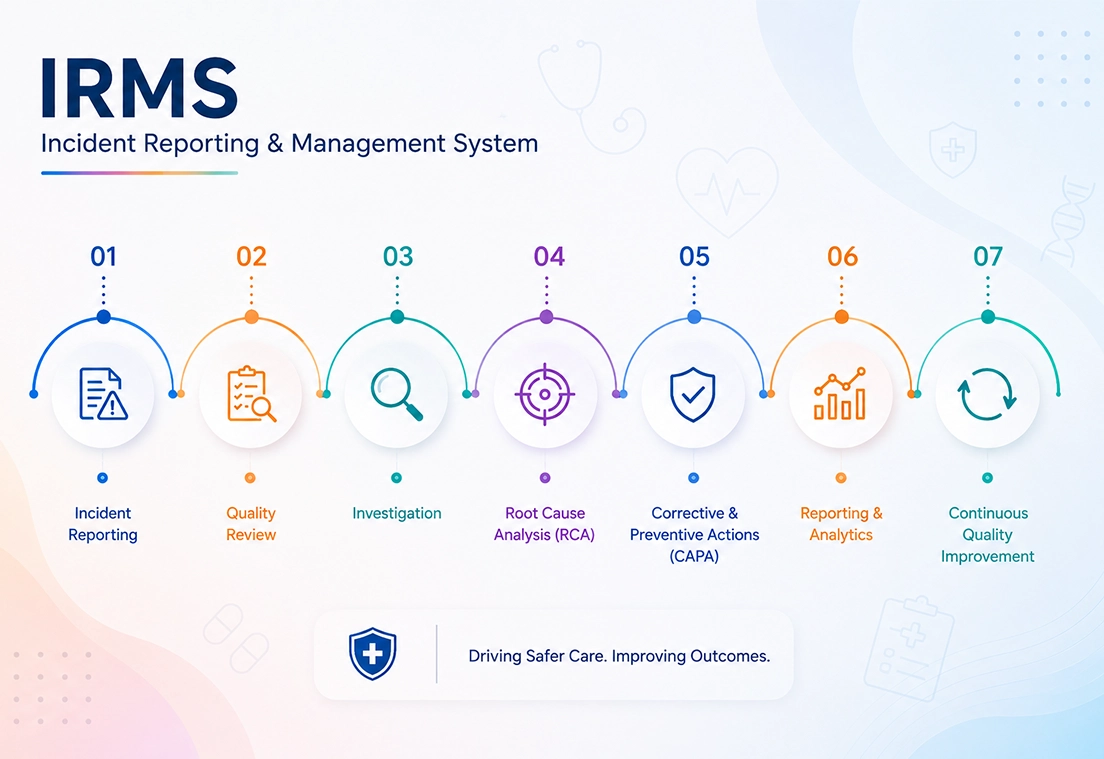
An Incident Reporting Management System (IRMS) helps to facilitate this via a linked workflow where each incident is analyzed, investigated, addressed and helps to enhance patient safety and improve the quality of healthcare services.
- Incident Reporting All incidents, near misses and safety events are reported using a consistent reporting protocol and provide the basis for action and accountability.
- Quality Review Before investigating each reported incident is reviewed and assessed for severity, priority, ownership, and escalation needs.
- Investigation Relevant teams collect facts, evidence and supporting information in order to develop an understanding of what went wrong and the circumstances surrounding the incident.
- Root Cause Analysis (RCA) The investigation is about finding the root cause, not just the immediate result, and will help to prevent recurrence of similar incidents.
- Corrective & Preventive Actions (CAPA) Planned, implemented and monitored corrective and preventive measures to eliminate identified gaps and improve healthcare processes.
- Reporting & AnalyticsIncident information is aggregated into dashboards and reports, which help hospitals track trends, assess quality results and make informed decisions on leadership.
- Continuous Quality ImprovementLearnings across the entire lifecycle are applied to enhance clinical practice, optimize processes, enhance governance, and create a culture of ongoing improvement within the organization.
From Investigation Findings to Sustainable Quality Improvement
A structured investigation should do more than establish what happened. Its findings should lead to measurable actions, verified improvements and organizational learning that reduces the likelihood of similar incidents.
Establish the Facts and Contributing Factors
Covers investigation, evidence gathering, stakeholder input and understanding the circumstances surrounding the incident.
Identify Systemic Causes Through RCA
Focuses on looking beyond the immediate outcome to identify process, communication, workflow, training or system level gaps.
Translate Findings into Corrective and Preventive Actions
Focuses on converting investigation findings into specific actions that address identified risks and reduce recurrence
Verify Whether Improvements Are Effective
Focuses on checking whether implemented actions actually addressed the identified causes and produced the intended improvement.
Close Incidents with Clear Accountability
Focuses on documented actions, approvals, verification, communication and responsible ownership before closure.
Turn Recurring Incidents into Organizational Learning
Focuses on using recurring patterns and incident trends to improve processes, training, policies and safety practices across the organization.
Incident Reporting Across Critical Hospital Departments
Incident reporting does not belong to one particular department, it is for quality improvement throughout the healthcare organization. There are specific clinical and operational risks associated with each department, from the Operation Theatre (OT) to Intensive Care Unit (ICU), the Emergency Department to the Laboratory, Radiology, Pharmacy, Blood Bank and these should be reported and investigated in a timely fashion and followed up consistently. Use of a standard incident management process in these high-risk environments can enhance patient safety, improve interdepartmental coordination, minimize recurring risks, and create a consistent process for ongoing healthcare quality enhancement.
Using Data and Analytics to Drive Smarter Healthcare Decisions
Recognizing patterns before they become problems
Hospitals can identify operation risks at an early stage and take targeted measures to improve their systems before risks impact patient care by studying trends in incidents, events that repeat themselves, and the severity of the incidents. This proactive approach allows quality teams to target high-risk areas and minimize the risk of incidents occurring again.
Improving Leadership Visibility
Hospital leaders see real time information regarding incident management activities on executive dashboards, SLA monitoring, and escalation tracking. Decision makers get real-time data on investigation progress, response timelines, quality performance and across departments without having to rely on manual reporting.
Supporting Data Driven Quality Improvement
Analytics converts incident reports into measurable organizational intelligence. The analysis of corrective actions, monitoring of performance indicators, and long-term quality trends can provide healthcare organizations with insights that support evidence-based decisions, enhance governance, accountability, and foster continuous improvement in healthcare quality.
From Incident Reporting to Continuous Quality Improvement
An incident management process is not determined by closing an incident quickly; it is determined by how well a healthcare organization learns from an incident. Each reported incident can be used to see what risks are present, how clinical processes can be improved, and how patient safety can be strengthened, based on the information from the incident. An Incident Reporting Management System (IRMS), as structured system, can help support consistent investigations, Root Cause Analysis (RCA), Corrective and Preventive Actions (CAPA), and data driven decision making, thus transforming the incident reporting into a continuous quality improvement process. At Aosta, we provide connected digital healthcare solutions that enable healthcare organizations to standardise incident management, enhance quality oversight and facilitate ongoing quality improvement through structured governance and insights.